Improve Your Diet to Reduce Abdominal Fat
Why Your Diet Matters Most. Your diet is the most powerful place to start if your Body Roundness Index (BRI) indicates higher abdominal fat.
While exercise and lifestyle habits matter, what you eat plays the biggest role in whether your body stores or burns fat, especially around your midsection.
The goal isn’t to follow a strict or restrictive diet. Instead, it’s about making consistent, sustainable improvements that support fat loss over time.
Why Diet Impacts Abdominal Fat
Abdominal fat is strongly influenced by how your body processes and stores energy. When you regularly consume more calories than your body needs, especially from processed foods and sugar, your body stores that excess energy as fat. A significant portion of that fat tends to accumulate around the abdomen.
Additionally:
- Diets high in refined carbohydrates and sugar can spike insulin levels
- Frequent spikes in insulin may encourage fat storage, particularly in the abdominal area
- Low-quality foods often lead to overeating due to poor satiety
The takeaway: improving your diet helps regulate appetite, reduce excess calorie intake, and promote fat loss.

Key Nutrition Principles for Reducing Abdominal Fat
1. Eat More Protein. Protein is one of the most effective nutrients for fat loss.
Benefits include:
- Helps you feel full longer
- Reduces cravings and snacking
- Supports muscle maintenance during weight loss
- Slightly increases calorie burn through digestion
Good sources:
- Lean meats (chicken, turkey)
- Fish
- Eggs
- Greek yogurt
- Beans and legumes
2. Increase Your Fiber Intake. Fiber (especially soluble fiber) plays a key role in reducing abdominal fat.
It works by:
- Slowing digestion
- Helping control blood sugar
- Increasing fullness
Good sources:
- Oats
- Fruits (apples, berries)
- Vegetables
- Legumes
- Flaxseeds
3. Focus on Whole, Unprocessed Foods. Whole foods are naturally more filling and nutrient-dense.
Examples:
- Vegetables and fruits
- Whole grains
- Lean proteins
- Healthy fats (nuts, seeds, olive oil)
Simple rule:
- If it looks close to how it exists in nature, it’s likely a better choice.
4. Reduce Sugar and Refined Carbs. Excess sugar is one of the biggest contributors to abdominal fat.
Pay special attention to:
- Sugary drinks (soda, juice, energy drinks)
- Packaged snacks
- White bread, pastries, and desserts
Quick win:
- Replacing sugary drinks with water can significantly reduce daily calorie intake.
Practical Meal Guidelines (Keep It Simple)
You don’t need a complicated meal plan. Use this simple structure:
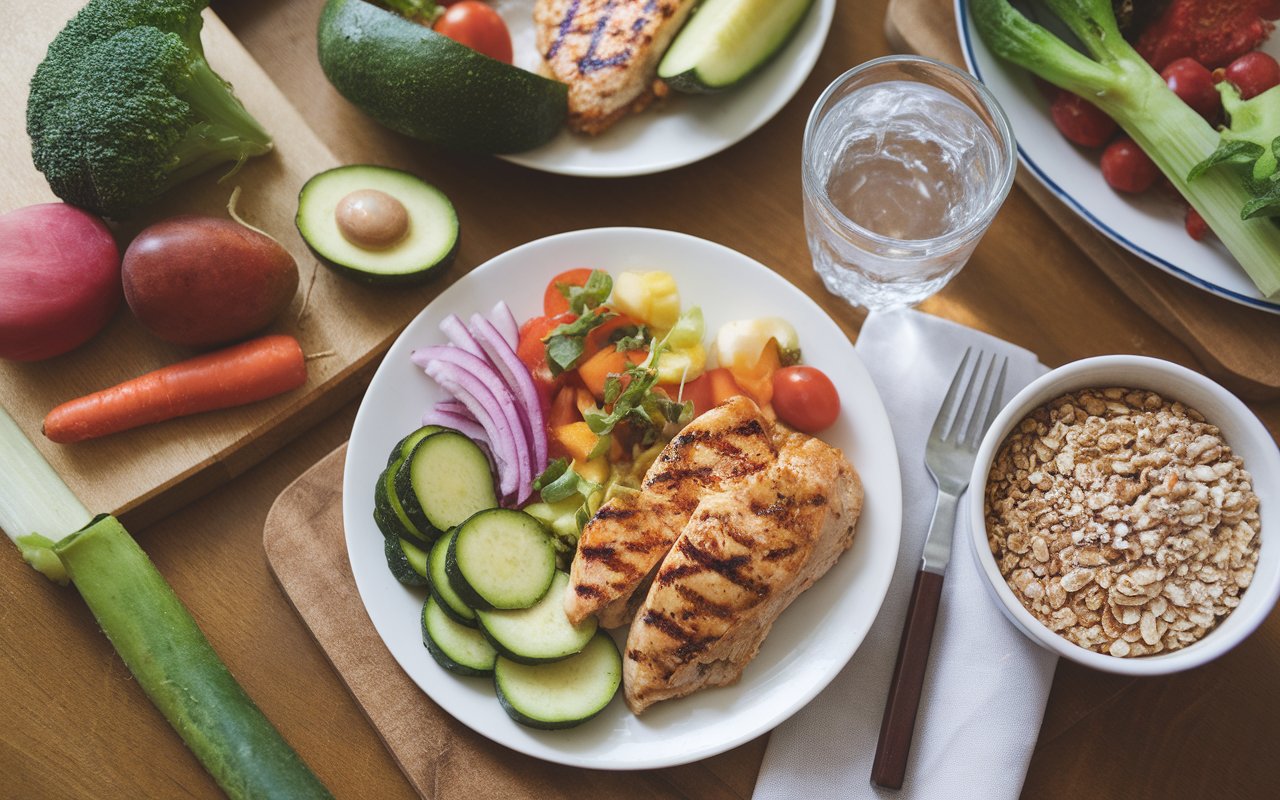
The Balanced Plate Method:
- ½ plate: vegetables
- ¼ plate: protein
- ¼ plate: whole grains or complex carbs
- Add a small amount of healthy fats

Example Day of Eating
Breakfast: Greek yogurt with berries and oats
Lunch: Grilled chicken salad with olive oil dressing
Snack: Apple with a handful of nuts
Dinner: Salmon, roasted vegetables, and brown rice
This approach keeps you full, energized, and in a better position to reduce abdominal fat.
Common Diet Mistakes to Avoid
1. Cutting Calories Too Aggressively. Extreme calorie restriction can slow metabolism, increase cravings, and lead to binge eating.
2. Skipping Meals. Skipping meals often leads to overeating later in the day.
3. Relying on “Healthy” Processed Foods. Many packaged foods labeled “healthy” are still high in sugar and calories.
How to Start Improving Your Diet Today
Keep it simple and realistic:
- Start with 1–2 small changes. Example: replace sugary drinks with water
- Add more protein to one meal per day
- Include vegetables in at least two meals
Focus on Progress, Not Perfection
Improving your diet is one of the most effective ways to reduce abdominal fat, but it doesn’t require perfection.
Focus on:
- Eating more whole foods
- Increasing protein and fiber
- Reducing sugar and processed foods
Over time, these habits will help you lower your Body Roundness Index and improve your overall health.
Next step: Track your progress and revisit the Body Roundness Index Calculator regularly to see how your body changes over time.
 using WordPress and
Comments are closed